
IT-APA Convention 2026
2nd IT-APA Convention · Aviation psychology: areas of intervention and perspectives
- Date
- 13 November 2026
- Place
- Innovation Hub, Aeroporti di Roma, Fiumicino, Italy
- Role
- Speaker
- Presentation
- Anthropomorphic AI: Sociopathic AI Features as Predictors of Career Opportunities and Threats Perceived by Pilots in Commercial AviationGiacomo Belloni and Petru Lucian Curşeu
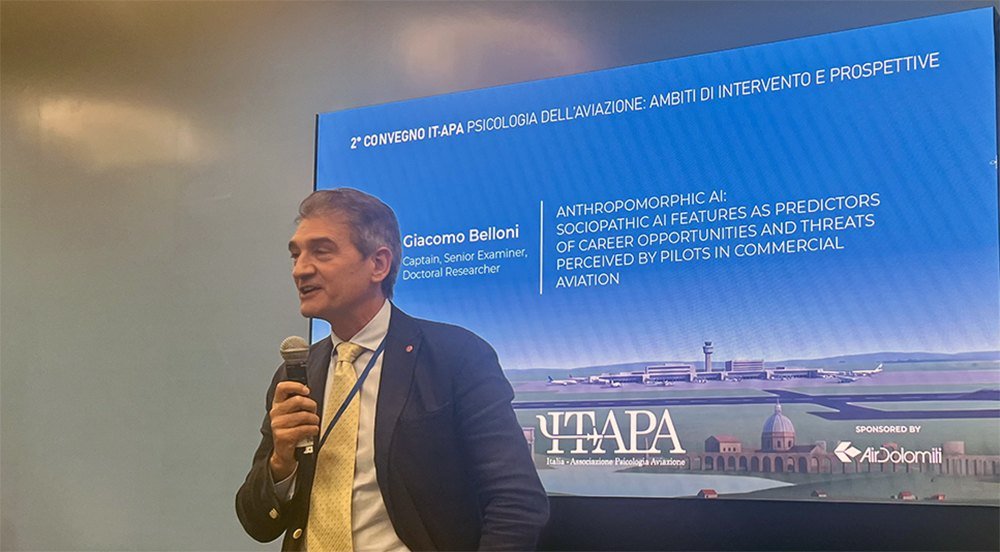


IT-APA, the Italian Aviation Psychology Association, brings psychologists together with pilots, controllers, training managers and the other people who run aeronautical organisations. Its second national convention, “Psicologia dell’aviazione: ambiti di intervento e prospettive” (Aviation psychology: areas of intervention and perspectives), took place on 13 November 2026 at the Aeroporti di Roma Innovation Hub, in Terminal 1 at Fiumicino. The programme moved from the legal framework that has shaped the aviation psychologist’s role since EU Regulation 2018/1042 to military and air traffic control practice, emergency response training, pilot selection, conflict management on the flight deck and the brain’s response to unexpected events.
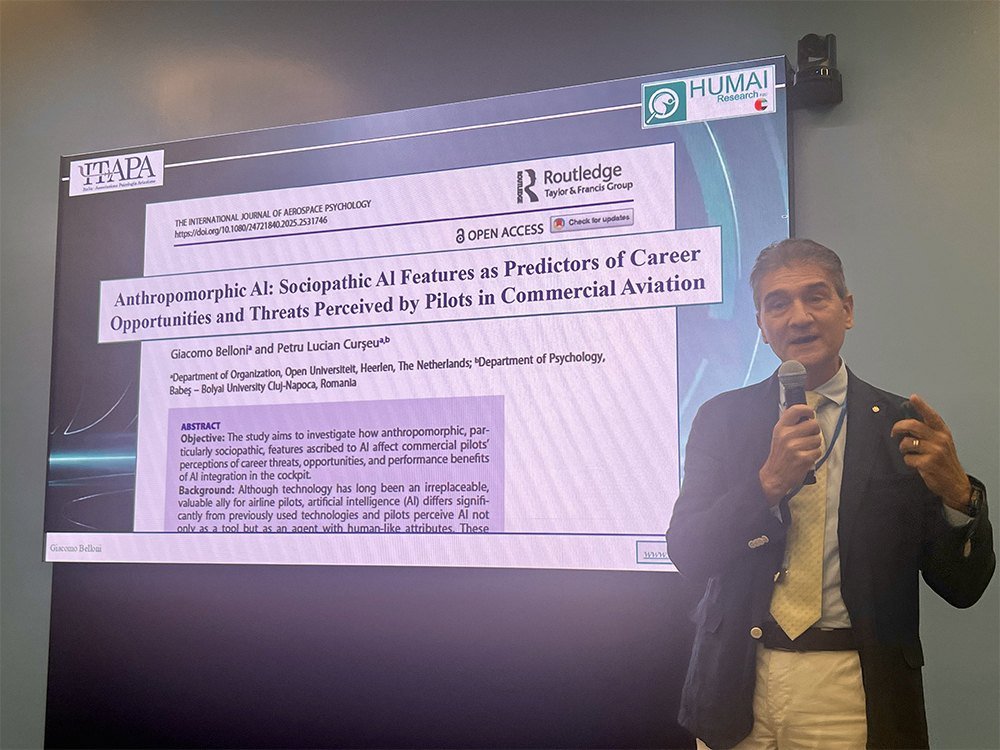
Captain Giacomo Belloni was invited to speak on behalf of HUMAI Research and presented our latest studies on the relationship between technology and human operators in high-complexity domains. The core of the talk was a study written with Professor Petru Lucian Curşeu and published open access in The International Journal of Aerospace Psychology. Pilots do not see artificial intelligence only as a tool. They often describe it as an agent with human-like traits, some of them unsettling, and the study looks at how those sociopathic features shape the way commercial pilots judge AI in the cockpit: as a threat to their careers, as an opportunity, or as a real gain in performance.
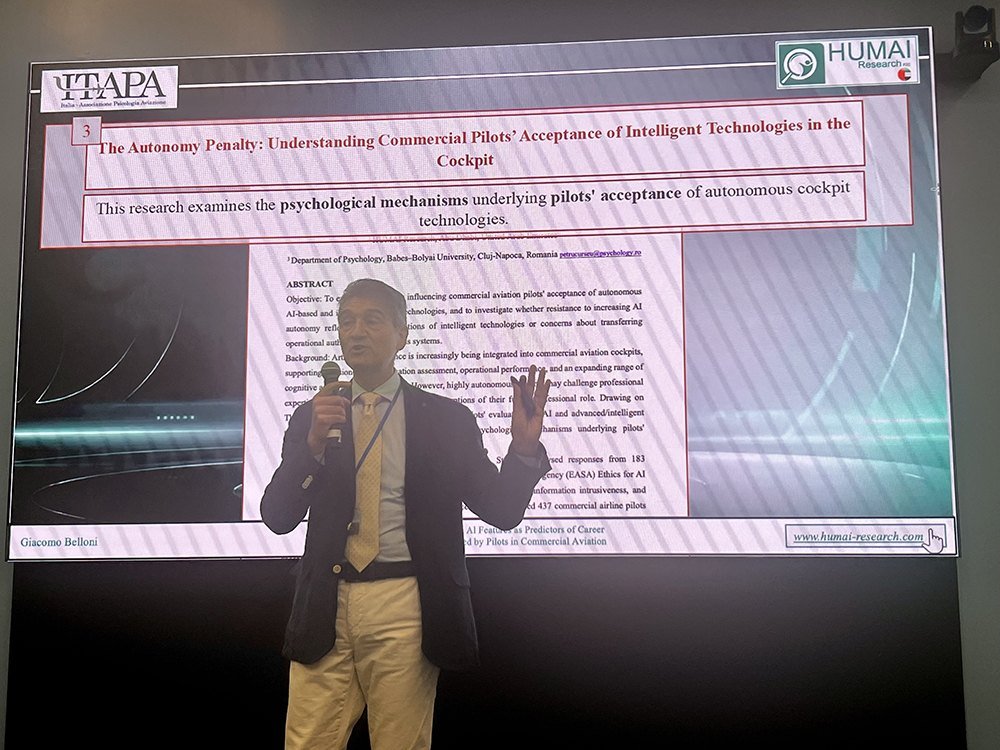
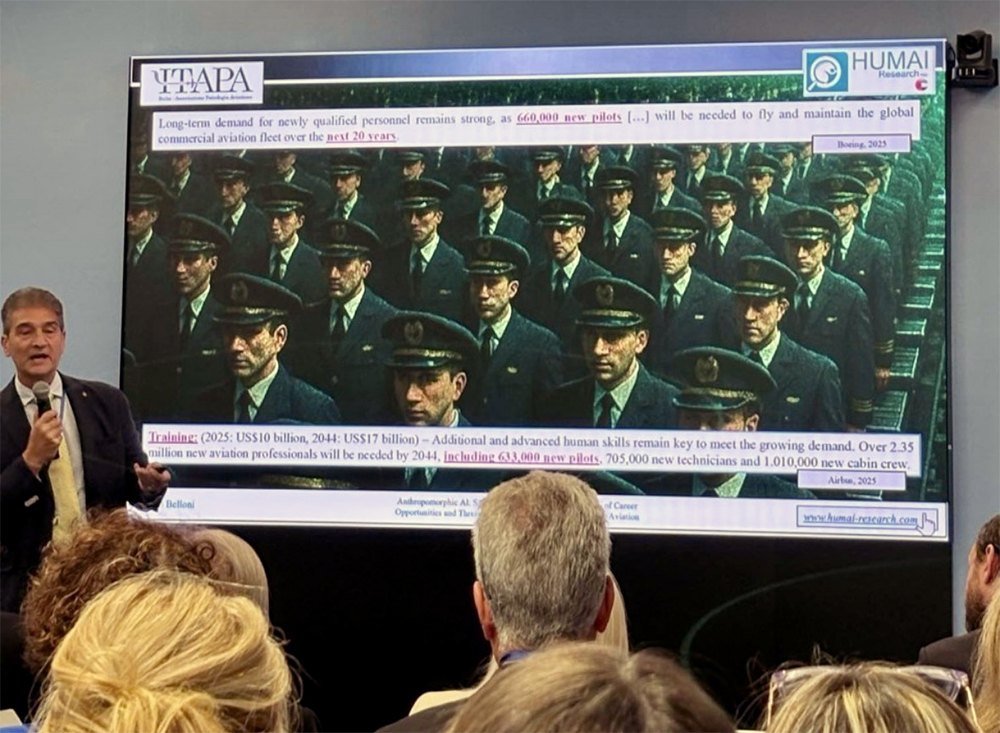
The talk placed these findings against industry forecasts that hundreds of thousands of new pilots will be needed over the next twenty years, and it closed with a first look at our more recent work, The Autonomy Penalty, on the psychological mechanisms behind pilots’ acceptance of autonomous cockpit technologies.
The convention was fascinating and highly engaging. It was a chance to meet accomplished professionals, compare perspectives and explore future scientific collaborations. Our sincere thanks go to IT-APA and to its conference director, Micaela Scialanga, for the invitation.