
Pilots as the Strong Link in the Aviation System: A Human-Centric Perspective
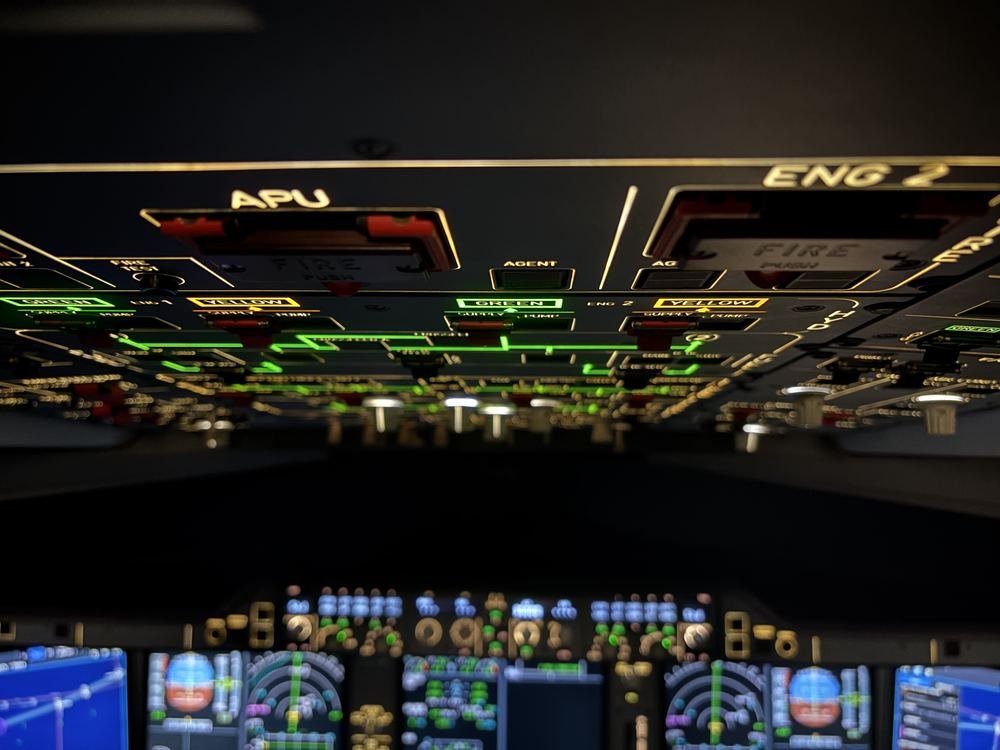
Pilots remain integral to aviation safety and operational resilience despite advancements in automation, particularly in unforeseen circumstances. In this article, I examine the critical role of pilots in the commercial aviation ecosystem, emphasising their adaptability, decision-making capabilities, and ability to manage automation complexities and unforeseen situations.
Pilots are often portrayed as mere operators of highly automated systems, but their broad situational awareness, problem-solving abilities, and capacity to handle unprecedented scenarios make them indispensable and irreplaceable. Their versatility surpasses even the most advanced automation, which excels at routine tasks but is inherently limited when facing novel or ambiguous situations (Dekker, 2014; Belloni, 2024). Pilots' ability to synthesise information, interpret ambiguous data, and make contextually appropriate decisions is critical to aviation safety.
Case Study: MD-11 landed with no lateral (roll) control and no flaps in JFK.
On 14th January 2003, a McDonnell Douglas MD-11-C landed without lateral ailerons control and flaps at John F. Kennedy International Airport in New York.
The MD-11 had three pilots, eight flight attendants, and 131 passengers. It was a combi configuration, with passengers in the front and cargo in the aft portion of the cabin.
The aircraft was approximately 80 nautical miles east-northeast of JFK, at 38,000 feet, when the autopilot unexpectedly disconnected during a turn. The captain then took manual control of the aircraft, noting that the control wheel did not respond on the roll axis even though it was still efficient on the longitudinal axis. The rudder responded to the pedal's inputs even if limited by the speed and the altitude.
The crew declared the emergency and requested a long vector for the approach to runway 31L. "In preparation for landing, the flight crew extended the leading edge wing slats without incident. As the flap handle was positioned to extend trailing edge wing flaps, a warning light illuminated, indicating a difference between the selected and actual flap positions" (NTSB, 2003). Nobody can imagine or understand the preoccupations, the high level of stress, and the state of mind of the captain and his crew in facing such a non-codified, incomprehensible, and unpredictable failure.
After their actions and considerations, after almost eight hours of flight, with a limited amount of fuel, they had to land the aircraft without clearly understanding what had happened and, more importantly, what could still occur, without lateral control and flaps, at a decidedly higher speed than usual.
The entire approach and landing were performed exemplarily with no automation, consistently applying the right command inputs—never excessive—to the remaining flight controls.
The landing occurred only after the captain and his crew had considered all possible options and taken all precautions to safeguard the aircraft, its occupants, and the ground installations.
Maybe they could have done better or worse, but in fact, they landed a plane safely without anyone getting hurt, and there is nothing more to add to that.
The post-flight examination and subsequent investigation by the National Transportation Safety Board (NTSB) revealed that a water line aft of the lavatory adjacent to door 3R had become disconnected. The compartment below and adjacent compartments were filled with water frozen during the long cruise over the Atlantic Ocean. The ice had coated multiple control cables in the wheel well area, including the control cables for the ailerons and flaps.
Adaptability: A Defining Trait of Human Pilots
Adaptability enables pilots to respond effectively to dynamic and high-stakes environments. Unlike automation, which relies on pre-programmed algorithms, human operators can weigh risks dynamically, drawing on intuition and experience. This capability is vital during adverse weather conditions, system failures (even the uncodified ones like the MD-11 case), and air traffic disruptions (Hollnagel et al., 2013). For example, during the 1989 United Airlines Flight 232 incident, pilots used differential thrust to guide the aircraft to an emergency landing despite the loss of all hydraulic systems, saving 184 lives (NTSB, 1990).
Moreover, pilots can improvise within regulatory frameworks, an attribute that sets them apart from automation. For example, during turbulent weather, a pilot might alter the flight path in collaboration with air traffic controllers to ensure safety and passenger comfort, even if automation recommends adhering to the original trajectory.
However, all this is obvious: intervening where (or when) technology or automation does not work correctly is part of their job; they are constantly trained for it. Beyond their importance in unforeseen situations, I would highlight their inescapable necessity in the normality of their duties in an environment that is becoming increasingly complex.
The more complex the system, the more essential human operators are to carry out numerous routine procedures and actions. The more technology is introduced, the more complex the system becomes. Greater complexity increases the likelihood of unpredictable events.
Years ago, to get an old analogue DC-9 to take off, just 5 minutes of preparation were necessary, including the time to calculate the take-off performances using paper matrices. Today, the pre-flight preparation for a modern airliner takes at least 30 minutes. If time ago, an airport map, a departure and a route chart were enough, today, the entire route must be previously inserted (and accurately checked by both the cockpit crew members) in the Flight Management Computers (FMC), the altitudes with the steep climbs, the winds, the temperatures, the tropopause altitude, the weights, the speeds, etc. The charts must be informatically prepared.
This involves entering and verifying a detailed flight plan into the Flight Management Computers (FMC), including the entire route, departure procedures, altitudes for steep climbs, winds, temperatures, tropopause altitude, aircraft weight, and speeds. While pilots once relied on a few simple charts based on a simple VOR or an ADF, today's charts are digital, tens, and full of abstract points with many lateral and vertical constraints to check and avoid dangerous deviations. These charts are digitally managed, requiring thorough preparation and cross-checking by the entire cockpit crew.
Today, the aeroplane is a terminal for entering data into a complex system. This platform interfaces with an interconnected network that must be carefully prepared, set, checked and confirmed. Furthermore, digital interfaces and platforms - unlike the old analytics ones - are complex and full of information that must be interpreted and understood.
Time ago, the cockpit was characterised by mechanical needles and indicators. Today, the information appears and disappears on more screens, in different sizes and colours, every time with a precise and distinct meaning, exponentially increasing (sometimes overloading) the pilot's cognitive capacity.
We continue to equip aeroplanes with advanced technology and simultaneously load pilots with normal and abnormal procedures to carry out and remember. Thousands of guidelines, manuals, procedures, bulletins, circulars, and communications pages are hidden in a computer's memory. Everyone feels free to add something to study and remember because the amount is not quantifiable if it is not materially visible.
Moreover, technology is not perfectly reliable. What would happen if no pilots could manage the continuous and nowroutine GPS Spoofing or Jamming?
Technology and automation still have enormous, unsolvable limits and cannot be managed without human intervention, resilience, experience, and versatility.
As we have seen, this is true in critical situations, including unforeseen and uncodified situations, and in normal flight operations.
I piloti oggi soon letteralmente l'anello forte di un sistema estremamente complesso, pieno di black swans ingestibili ne dalla tecnologia tantomeno dall'automazione.
Managing Automation Complexities
Automation introduces challenges such as complacency, mode confusion, and automation surprises. Pilots address these complexities by actively monitoring systems, cross-verifying automated outputs, and maintaining manual flying proficiency (Parasuraman & Riley, 1997). The 2013 Asiana Airlines Flight 214 crash underscores the dangers of over-reliance on automation, highlighting the need for pilots as both monitors and skilled manual operators (NTSB, 2014).
Additionally, mode confusion—where pilots misinterpret the operational state of an automated system—can lead to significant errors. For instance, automation may activate an unexpected mode due to input errors, creating risks that pilots must mitigate through situational awareness and manual intervention. Pilots also mitigate reduced manual flying skills, a byproduct of extensive automation use, through rigorous training programs that emphasise manual proficiency and real-world scenarios.
The Human-Machine Interface and Expertise
Pilots act as the critical interface between complex systems, translating technological inputs into actionable decisions while managing system limitations (Wiener, 1988). Their expertise, honed through rigorous training and real-world experience, ensures effective collaboration with air traffic controllers, ground crews, and other stakeholders, maintaining operational cohesion even during disruptions (Endsley, 1995).
Furthermore, pilots bring a collaborative dimension to the aviation system by coordinating with various stakeholders to manage unforeseen challenges. For example, during congested airspace conditions, pilots negotiate with air traffic controllers for expedited approaches or holding patterns to minimise delays, demonstrating their ability to dynamicallybalance safety and operational efficiency.
Conclusion
Therefore, the question is, what would have happened without the commander's critical capacity and versatility in managing a complex and unprecedented situation, as in the case of the MD-11 in New York, where human experience and the ability to analyse outside the box proved decisive in landing the aircraft when any automation was reliable?
Pilots remain the strong link in aviation's safety chain as automation advances. Their ability to adapt, make informed decisions, and manage the human-machine interface ensures resilience in an increasingly automated ecosystem. Balancing technological efficiency with human expertise will be critical to sustaining and enhancing aviation safety.
References
Belloni, G. (2024). The limits of data-driven technologies in the world of complexity. https://www.linkedin.com/pulse/limits-data-driven-technologies-world-complexity-giacomo-belloni-khr4f/?trackingId=UMBxci58HB7BT3vETkbF%2Bg%3D%3D
Dekker, S. (2014). The Field Guide to Understanding' Human Error'. CRC Press.
Endsley, M. R. (1995). Toward a theory of situation awareness in dynamic systems. Human Factors, 37(1), 32-64.
Harris, D. (2011). Human performance on the flight deck. Ashgate Publishing.
Hollnagel, E., Paries, J., Woods, D. D., & Wreathall, J. (2013). Resilience Engineering in Practice: A Guidebook. CRC Press.
NTSB (2003). Factual Report. Flight control difficulties, McDonnell Douglas MD-11-C, 14th January 2003. National Transportation Safety Board.
NTSB (2014). Asiana Airlines Flight 214 Accident Report. National Transportation Safety Board.
Parasuraman, R., & Riley, V. (1997). Humans and automation: Use, misuse, disuse, abuse. Human Factors, 39(2), 230-253.
Wiener, E. L. (1988). Cockpit automation: In need of a philosophy. Human Factors, 30(6), 677-689.