
The Interplay Between Contemporary Complexity and Technology: Implications for Commercial Pilots
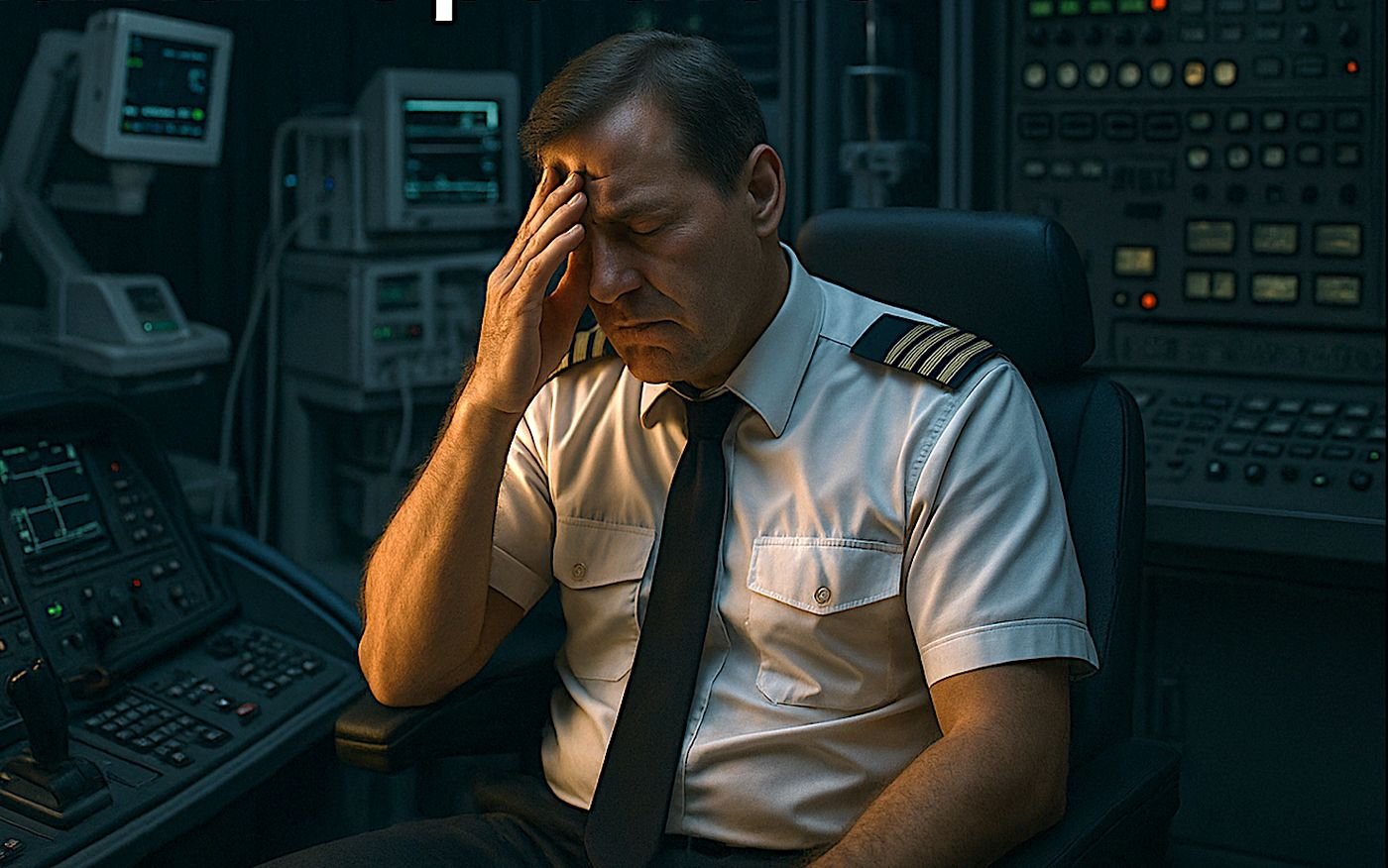
The contemporary world is characterised by increasing complexity intertwined with rapid technological advancements. This complexity emerges from various socio-technical systems integrating human, technological, and environmental components.
As technology is often perceived as the primary tool for managing complexity (Lachter et al., 2017), a paradox arises: while it simplifies specific processes, it simultaneously introduces additional layers of intricacy, increasing flight crews' mental demands (de Oliveira & de Oliveira Ribeiro, 2005; Nguyen et al., 2018).
This is particularly evident in commercial aviation, where pilots must navigate the growing demands of advanced technologies alongside increasingly complex operational environments.
Complexity is a defining feature of modern socio-technical systems, characterised by interdependence, non-linearity, and emergent behaviours (Simon, 1962; Perrow, 1984). Small perturbations can lead to significant, often unpredictable consequences in such systems.
Perrow's (1984) 'Normal Accident Theory' suggests that systems involving high-risk and closely linked components—like nuclear power plants and aviation networks—are naturally prone to failure because their parts are so complex and tightly connected that a problem in one area can quickly spread to others. Globalisation and digital transformation have intensified these interconnections, leading to an era where technological infrastructures manage vast, interwoven networks of information and operations (Kleinberg, 2000).
Technology is often presented as a mitigating force against complexity. Automated decision-making systems, artificial intelligence (AI), and algorithmic governance are deployed to streamline processes and reduce human workload. However, these solutions introduce new forms of complexity, shifting cognitive demands from procedural execution to system supervision and error management (Bainbridge, 1983).
A well-established paradox in socio-technical systems is that technology, while designed to mitigate complexity, often amplifies it (Sarter & Woods, 1995; Dekker, 2011). This phenomenon can be observed in aviation, healthcare, and finance, where increased automation necessitates higher cognitive adaptability and critical thinking from human operators.
Bainbridge's (1983) "Ironies of Automation" highlights that highly automated systems place greater cognitive demands on human operators when unexpected failures occur. In automated environments, human roles shift from active controllers to passive monitors, which can degrade manual skills and situational awareness (if you want to dig further, read my article "Advanced Automation Paradoxes and Commercial Aviation").
When automation fails, the operator is required to intervene swiftly but often lacks the practice or real-time understanding necessary for effective decision-making (Endsley, 1995).
Commercial aviation epitomises the intersection of complexity and technology. Aircraft systems have evolved from mechanical controls to digital Fly-By-Wire architectures that integrate real-time data analytics, autopilot systems, and AI-assisted decision support (Wiener, 1988). This transition has redefined the pilot's role from active aviator to system manager, intensifying their cognitive demands (Parasuraman et al., 2000).
Introducing Flight Management Systems, autopilots, and AI-driven predictive analytics has profoundly transformed aviation. These systems optimise flight paths, fuel efficiency, and response to environmental conditions, reducing pilot workload under nominal conditions (Casner et al., 2014). However, when anomalies arise—such as sensor malfunctions, unpredictable weather conditions, or automation failures—pilots must assume direct control under high-stress conditions with minimal preparation time (Dekker, 2014).
On April 26, 1994, China Airlines flight 140 crashed while approaching Nagoya airport in Japan after the crew attempted to recover the aircraft from the consequences of the first officer inadvertently activating Go/Around mode.
Two hundred sixty-four people died, and seven passengers were seriously injured as a result of this accident.
The final report of the Japanese Air Accident Investigation Commission (AAIC), published in 1996, highlighted some critical issues: insufficient crew training to understand the operation of onboard automatic systems and deficiencies in designing the aircraft's computerised flight control system.
AAIC, therefore, issued many recommendations for both the company and the manufacturer.
The company was required to improve its pilots' training in comprehending the functions of the auto flight system on advanced technology aircraft.
AAIC also issued recommendations to the manufacturer, specifically regarding the design of certain cockpit interfaces, including the autopilot's disconnection and override functions, as well as the warnings associated with the trimmable horizontal stabiliser (THS), particularly when it approaches an out-of-trim condition or continues to move beyond a defined time threshold (AAIC, 1996).
After the report's publication, the Federal Aviation Administration (FAA), in collaboration with the European Joint Aviation Authorities (JAA), commissioned a study to issue recommendations "for the future design and certification of pilot interfaces and automation". The study once remarked on the close correlation between advanced technology and automation of modern aircraft and the human factor (Demagalski et Al., 2002).
In 2013, ICAO published the first edition of the Manual of Evidence-based Training, which, not coincidentally, raises the same concerns that emerged in the recommendations issued by the Japanese AAIC in 1996: the problems related to the development of technology and its relationship with its users. These dynamics were changing profoundly, highlighting new elements of complexity.
Gall, J. (1975), in "Systemantics: How systems work and especially how they fail", argues that a complex system can fail in infinite ways.
Accidents and Lessons Learned
Several airline accidents illustrate the dangers of over-reliance on automation; here are some of the most well-known examples.
• Air France Flight 447 (2009): Pilots were unprepared for manual flight recovery after the autopilot disengaged due to inconsistent airspeed readings. The resulting confusion and loss of control led to a catastrophic stall (BEA, 2012).
• Lion Air Flight 610 (2018): The Boeing 737 MAX MCAS (Maneuvering Characteristics Augmentation System) introduced new automated functionalities that pilots did not fully understand, contributing to a fatal crash (FAA, 2019).
• Asiana Airlines Flight 214 (2013): The mismanagement of automated systems and an overreliance on autothrottle led to a crash during landing in clear weather conditions (NTSB, 2014).
These incidents underscore that technological sophistication does not eliminate the need for fundamental piloting skills but necessitates a dual proficiency in manual control and system oversight.
Cognitive Load and Human Factors in Aviation
As automation increasingly governs aviation, cognitive load theory (Sweller, 1988) becomes essential in understanding pilot performance. Pilots must process multiple streams of information while maintaining situational awareness, which becomes exponentially more challenging as complexity increases (Endsley & Kiris, 1995). When pilots operate in high-workload scenarios, decision fatigue, stress, and cognitive tunnelling can impair judgment (Hancock & Szalma, 2008).
Mitigating these effects requires designing interfaces that enhance, rather than obscure, situational awareness. Adaptive automation, which dynamically shifts control between humans and machines based on situational demands, has been proposed as a solution (Kaber & Endsley, 2004).
Moreover, training methodologies must evolve to equip pilots with the skills needed to manage increasing complexity. Evidence-Based Training (EBT) and Competency-Based Training (CBT) emerged in 2013 as frameworks emphasising adaptive expertise over rote memorisation (ICAO, 2013). However, to avoid becoming inadvertently entrenched in a particular cultural mindset—as has happened in the past—by relying on methodologies that may no longer be suitable for the rapidly evolving complexity of current systems, we should ask: Given the swift transformation of operational contexts, is a methodology published in 2013 still effective after more than twelve years?
To sum up, the relationship between technology and complexity in contemporary systems is bidirectional: technology is both a tool for managing complexity and a contributor to it. In commercial aviation, this dynamic places pilots in a precarious position, balancing the benefits of automation with the imperative to maintain manual competency.
To navigate this landscape, a systemic approach—one that integrates robust human factors research, adaptive training paradigms, and dynamic automation interfaces—is required. The future of aviation safety hinges on understanding and mitigating the unintended consequences of increasing technological sophistication, ensuring that human operators remain adept at managing the complexity of routine operations and critical contingencies caused by unpredictable events.
References
AAIC (1996). Aircraft Accident Investigation Report. China Airlines, Airbus Industrie A300B4-622R, B1819. Japan Aircraft Accident Investigation Commission. Nagoya Airport. AICC. Japan.
Bainbridge, L. (1983). "Ironies of Automation." Automatica, 19(6), 775-779.
BEA. (2012). "Final Report on Air France Flight 447." Bureau d'Enquêtes et d'Analyses.
Dekker, S. (2011). Drift into Failure: From Hunting Broken Components to Understanding Complex Systems. Ashgate.
de Oliveira, C. G., de Oliveira Ribeiro, S. L. (2005). Evaluation of Workload in High Complexity Work Place: an Experiment During a Real Situation. 2005 International Symposium on Aviation Psychology, 177-182. https://corescholar.libraries.wright.edu/isap_2005/22.
Endsley, M. R. (1995). Toward a Theory of Situation Awareness in Dynamic Systems. Human Factors, 37(1), 32-64.
Gall, J. (1975). Systemantics: How systems work and especially how they fail. New York: General Systemantics Press.
Lachter, J., Brandt, S.L., Battiste, V., Matessa, M., Johnson, W. W. (2017). Enhanced ground support: lessons from work on reduced crew operations. Cogn Tech Work 19, 279–288. https://doi.org/10.1007/s10111-017-0422-6.
Nguyen, T., Lim, C. P., Nguyen, N. D., Gordon-Brown, L., & Nahavandi, S. (2018). A review of situation awareness assessment approaches in aviation environments. arXiv preprint arXiv:1803.08067. https://arxiv.org/abs/1803.08067.
Parasuraman, R., Sheridan, T. B., & Wickens, C. D. (2000). "A Model for Types and Levels of Human Interaction with Automation." IEEE Transactions on Systems, Man, and Cybernetics, 30(3), 286–297.
Perrow, C. (1984). Normal Accidents: Living with High-Risk Technologies. Princeton University Press.
The Interplay Between Contemporary Complexity and Technology: Implications for Commercial Pilots © 2025 by Giacomo Belloni is licensed under CC BY-NC 4.0